
Welcome:
Login
|
Sign Up
|
About CircleID
Follow:
|
|

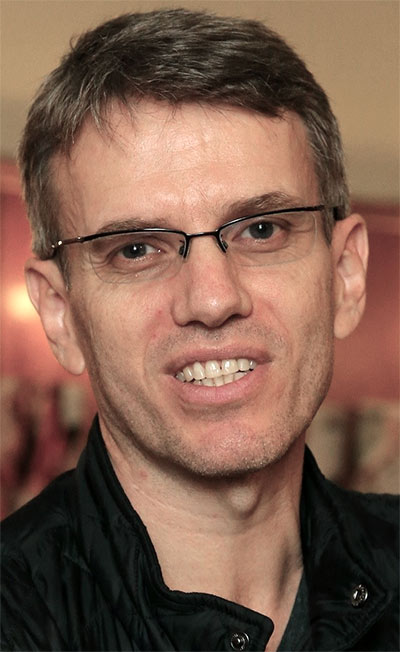
Except where otherwise noted, all postings by Veni Markovski on CircleID are licensed under a Creative Commons License.
Dear colleagues and friends, it is very, very difficult to write these words. The loss of a young person is always a tragedy. The untimely loss of a friend is even worse and is always a very difficult time. The loss of a fellow Internet pioneer is like losing a brother. Tarek Kamel was a great friend of the Internet Society–Bulgaria. I remember him giving an interview for the Bulgarian public television in Yokohama during the INET 2000 meeting... more
ISOC-Bulgaria has been following the developments around Internet governance on the global arena since 2001, when we started participate in the WSIS process. Our representatives supported the efforts of the Bulgarian government to make sure the Internet is developed in an open, bottom-up, and transparent way. Last week in Geneva (November 11-12) at the ITU there was a meeting of the ITU Council Working Group on international Internet-related public policy issues. more
Someone was talking the other day about the ITU and what they think about the issue of Internet Governance. I know what the ITU Secretariat wrote in a paper some years ago (Bulgaria was one of the governments heavily criticizing the errors and flaws in the ITU paper), but also decided it might be interesting to show how this question has evolved in the words of the ITU Secretary-General Hamadoun Toure, by finding out how his positions on that issue, and on the role of the ITU have changed through the years. more
This year in July gen. Keith Alexander, director of the National Security Agency and head of the US Cyber Command participated at DefCon, the hackers conference in Las Vegas. In his address, gen. Alexander said, among other things, "This is the world's best cybersecurity community. In this room right here is the talent our nation needs to secure cyberspace."... As someone, who is regularly meeting the top Russian cyber folks, I already know (unofficially, of course) how the words of gen. Alexander were met in Moscow. more
The last few months have shown a number of signs that cooperation in cyberspace is not just necessary, but it is vital for the survival of the Internet as we know it. There is no need to provide links to all the articles and news stories that talk about the dangers of cyberattacks on the infrastructure in the USA or other countries - you can find plenty of them. ... What misses really in these stories is the answer to the question "So, what?" more
November 11, 2010, marked the day when the new Internationalized Domain Name (IDN) contry code Top-Level Domain (ccTLD) .?? (Cyrillic for ?????????? ?????????, Russian Federation) was opened for general registration. Prior to that date the registration was open only for trademark owners and governmental institutions. ... It turned out they needed less than three hours to reach to the 100,000 domain names! Such a gold rush was not expected, and numbers continued to grow - 200,000 within 6 hours... more than 460,000 by today. more
Eugene Kaspersky, CEO and co-founder of Internet security giant Kaspersky Lab said last week that "terrorists could build a botnet that could bring down the entire Internet structure". Mr. Kaspersky ended his speech with the statement that "a global cyber police force, and global cooperation between law enforcement agencies and governments is needed". This goes very much in accordance with some of the conclusions in the Cyberspace Policy Review more
John McCain has introduced a new legislation at the US Senate, which is called Internet Freedom Act... I agree with the statement about the governmental control and regulation -- we've done exactly this in Bulgaria, and the results are stunning (for the US user): today Bulgaria ranks No. 1 among the EU in number of users per capita who are connected to the Internet at speeds above 100 Mbps (in the US, the typical connection speed is 3 Mpbs), or 30 times faster than the US, and in many cases, people are connected via fiber, at 1000 Mbps, or 300 times faster. more
Igor Schegolev, the Russian Minister of Telecom and Mass Communications spoke at the opening of the InfoCom 2008 exhibition in Moscow. Among other things, which made news (for example, that the Russian government will be implementing a free and open source based operating system on all computers in the Russian schools), he also made the following remarks - translated by me in English. more
The IGF has a tendency of slowly shifting from a place of a discussion about the way the world accesses information resources, into a place where only topics that make the headlines are being highlighted, with many of the same players being among the loudest speakers. We believe that due to cross-cultural reasons, these people are mainly coming from North America and Western Europe. We urge the IGF to allocate equal time for people from regions outside of those two. more
I have written a short paper on the topic of Internet Governance. Since it includes a number of resources, it would be easier for me to just point to a link with the document itself. Below are some selected excerpts from the document. "Several myths have been spreading around the World Summit on the Information Society (WSIS), but especially after the first Internet Governance Forum (IGF): The critical Internet resources (CIR) consist only of the IP addresses and the domain name system... There are only 13 root servers..." more
In the last few years there have been many discussions on how the Internet is governed, and how it should be governed. The whole World Summit on the Information Society (WSIS) ended talking about this problem. It caused exchange of letters between the US Secretary of State and the European Union presidency. And it caused a public discussion, organized by the US Department of Commerce on that issue. I saw some reflection of this discussion and here are some comments on that. My colleague Milton Mueller of the Syracuse University sent me an e-mail today in which, among other, it says, "A global email campaign by IGP generated comments from 32 countries... more
The amount of time one spends actually working for ICANN is enormous. And that limits the people who can actually work for ICANN as directors. I say "work", but you should know that this is not a paid work. Nope. It's being performed for free -- we dedicate our time and skills to ICANN free of charge. Many people ask me "What is it like to be on the Board of ICANN?" Here is my response, with some astonishing data. more
Yesterday, ICANN took a decision to not approve the .xxx in the top-level domain zone. The application was proposed by the ICM Registry. ...My explanation for my vote is as follows: "I think there should be more new TLDs. Many more. I believe my vote was not on the controversial issue about content (and ICANN should not deal with content), but on the simple issue if the agreement is good to be accepted. I also wrote on April 22nd in my blog that ICM at least are trying to prevent harmful content reaching our children. I prefer that, than just saying, ".xxx is bad, abolish it". OK, we did that. Now what?" more
Well, at least one part of it. As ICANN has announced, the Board approved the VeriSign Settlement Agreement. Now, there will be many questions, many pros and contras, but for me the main question is that finally this discussion is over. Here's what I think about my vote and the agreement itself. more
A World-Renowned Source for Internet Developments. Serving Since 2002.