
Welcome:
Login
|
Sign Up
|
About CircleID
Follow:
|
|

 ICANN's 2026 new gTLD round attracted 1,615 applications, with competition concentrated on contested extensions. Strong registration growth contrasts with weak renewal rates, raising questions about long-term demand and commercial viability.
 The 15th Registration Operations Workshop convenes domain name and DNS professionals September 29 for technical sessions on mTLS, RPKI, DNS resilience, delegations, DNSSEC, registrar concentration, dispute proceedings and alternative naming systems.
 IPv4's fixed supply masks a crucial mismatch: addresses can be acquired quickly but deployed only gradually. After 2025's price declines, returns increasingly depend on lease rates, absorption speed and the operator's ability to monetise inventory.
 AFRINIC's proposed Constitution offers Africa's troubled internet registry a chance to turn years of litigation, disputed elections and institutional paralysis into durable governance, provided reforms constrain external capture, internal concentration and administrative overreach alike.
National Internet Registries were created to give countries greater control over internet number resources. Yet where they add opacity and restrict transfers, they can trap scarce IPv4 capacity, slowing growth instead of strengthening digital resilience.
 Internet institutions can remain operational while losing the legitimacy that sustains their authority. A proposed governance stress test distinguishes continuity from legitimacy, helping expose capture, substitution, and accountability failures before institutional crises become irreversible realities.
 Internet multi-stakeholder governance mistakes participation for legitimacy, granting policy processes implied authority without public authorization. As IPv4 becomes capital, operator accountability, not attendance, should define binding decision-making and institutional legitimacy instead of consensus.
 After a sharp correction, the IPv4 market is showing signs of stabilization. Rising buyer activity, tightening supply expectations, and growing AI infrastructure demand are expected to support gradual price recovery through 2026, improving conditions for sellers.
 As AI giants build vertically integrated, compute-centric networks, they are bypassing DNS, reshaping routing, and concentrating infrastructure power, placing decades-old internet governance institutions under mounting pressure and raising the prospect of a fragmented, AI-driven Splinternet.
ICANN's court intervention in AFRINIC's winding-up case widens a local corporate dispute into a global Internet governance test, exposing weaknesses in RIR protections and strengthening calls for ICP-2 reforms to safeguard registry continuity.
ICANN's AFRINIC episode shows how support can harden into perceived authority. A standing RIR Boundary Protocol would force early warnings, role disclosure and procedural safeguards before regional engagement drifts into governance redesign.
ICANN's Smart Africa engagement shows how proposals can gain authority without formal endorsement, raising harder questions about CAIGA, ICP-2 and whether regional partnerships need earlier safeguards when RIR governance begins to shift under institutional cover.
An ICANN-backed African internet-governance initiative exposed a deeper institutional problem: whether global coordinators must warn when regional policy processes drift into RIR governance, before facilitation, silence and funding harden into implied legitimacy for contested reforms.
As AFRINIC rebuilds after years of litigation, the Number Resource Society is urging members to sign powers of attorney, raising fears that coordinated advocacy, commercial interests and geopolitical pressures could reshape African control over critical internet resources.
Africa's internet governance faces parallel tracks as AFRINIC's community-led reforms unfold alongside a continent-wide blueprint, raising questions over whether legitimacy will stem from participatory processes or increasingly coordinated external alignment.
 Iran Threatens Subsea Internet Cables in the Strait of Hormuz
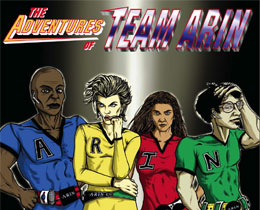 FUD for Thought: ARIN Releases Comic Books
A World-Renowned Source for Internet Developments. Serving Since 2002.