
Welcome:
Login
|
Sign Up
|
About CircleID
Follow:
|
|



|
||
|
||
The recently completed ICANN Conference in Seoul, Korea will be remembered for a unique accomplishment—the first definitive step towards the addition of Internationalized Domain Names (IDNs) to the Internet root. In the words of ICANN’s press release:
“ICANN’s Fast Track Process launches on 16 November 2009. It will allow nations and territories to apply for Internet extensions reflecting their name—and made up of characters from their national language. If the applications meet criteria that include government and community support and a stability evaluation, the applicants will be approved to start accepting registrations.”
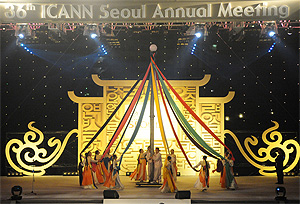 As the announcement states, the applicants, at this time, are limited to nations and territories; the first IDNs will be in country code top level domains (ccTLDs). The generic TLDs, (the gTLDs, e.g., .org, .com and .info) will have to wait for their opportunity to apply for IDNs. There is a long history to this development. Its timing is at least partly due to the insistence of two major nations, China and Russia, both of which have been in a position to establish alternate roots in Chinese and Cyrillic characters, respectively. The ICANN approval of the Fast Track Process recognizes this reality while maintaining the global interoperability of the Internet. Two major issues, however, remain unresolved—the question of ccTLD financial support for ICANN, and the nature of the agreements between ICANN and each ccTLD concerning their operations.
Before the Conference, ICANN released the third version of the Draft Applicant Guidebook for new generic Top-Level Domains (gTLDs)—the “DAG”. Just as the second version was not greeted with universal acclaim, the third fails to meet the concerns of many Internet stakeholders. At the conference, ICANN recognized another reality by acknowledging that the timeline for the introduction of new gTLDs is put off indefinitely. There is likely to be at least one more version of the DAG before the final Guidebook appears. ICANN is still looking for some kind of consensus on the four overarching issues it has identified:
ICANN has established a Wiki for comment on each of them.
The trademark protection issue was singled out for separate treatment. ICANN’s Board wrote to the GNSO Council requesting its “view on whether the following rights protection mechanisms recommended by the staff are consistent with the GNSO’s proposed policy on the introduction of new gTLDs, and are an appropriate and effective option for achieving the GNSO’s stated principles and objectives:
The GNSO Council referred the questions to a Special Trademark Issues team who will attempt to reach consensus by 14 December; in the absence of consensus, the Board will adopt its staff recommendations.
On the issue of TLD Demand and Economic Analysis, ICANN continues to receive criticism regarding the nature of its commissioned economic studies and their failure to deal effectively with such questions as the ability of new registries to be vertically integrated with registrars. PIR, the .Org registry, has been among the leaders in pointing out the dangers of insider trading (domain tasting and front running) that is the likely result of vertical integration. PIR has joined with Afilias (.info) and NeuStar (.biz) in proposing a requirement that a new registry not be allowed to register names through an affiliated registrar. This proposal would not ban cross-ownership itself.
Regarding the Root Zone Scaling issue, there were a number of discussions at the Conference about the technical concerns. The consensus appeared to be that the experts are comfortable with the idea of introducing about 100 new TLDs into the root per year, but any number above that would require at least careful monitoring to avoid overloading the capacity of the system.
The subject of Mitigating Malicious Conduct continues to be a difficult one. There were several meetings at the Conference about abusive domain name registrations, and there are a number of initiatives under way to encourage registries and registrars to take action when the sources of phishing, malware and the like are uncovered.
In Seoul, the reform of the GNSO was largely accomplished. The charters of all the new Stakeholder Groups: Contracted (Registry and Registrar), Non-Contracted (Commercial and Non-Commercial) have been accepted. A question regarding the charter for the Non-Commercial Stakeholder Group was temporarily resolved by making the NonCommercial Constituency (NCUC) a constituency within the Stakeholder Group, making it possible for another constituency to be formed within the group.
Sponsored byCSC

Sponsored byDNIB.com

Sponsored byIPv4.Global

Sponsored byVerisign

Sponsored byRadix

Sponsored byVerisign

Sponsored byWhoisXML API


A World-Renowned Source for Internet Developments. Serving Since 2002.