
Welcome:
Login
|
Sign Up
|
About CircleID
Follow:
|
|
|

 New data on DNS abuse reveals most malicious domains remain active beyond 24 hours, while a handful of registrars host the bulk of infrastructure, leaving India's population of first-generation internet users uniquely exposed to fraud. more
Fake recruitment websites exploiting India's young job seekers are proliferating, exposing millions to identity theft, financial fraud and malware while regulators, registrars and digital literacy programs struggle to keep pace with a growing labor market. more
 Third-party domains exploiting brand names are proliferating, with 88% of homoglyphs externally owned. Many remain dormant yet email-enabled, creating scalable phishing risks as attackers increasingly target trust rather than infrastructure. more
 GlobalBlock's expansion into China and Germany signals a shift from reactive brand protection to centralized prevention, as firms seek scalable, cost efficient defences against proliferating AI driven domain abuse worldwide amid a fragmented digital landscape. more
 ICANN's new DNS abuse rules mark progress, yet short-term domain leasing enables fleeting, hard-to-detect attacks. A proposed 30-day minimum lease could curb cybercrime by undermining the economics of weaponised parked domains. more
 Poland thwarted a large-scale cyberattack on its energy grid without disruption, offering a rare case study in critical infrastructure resilience, decentralised energy governance, and the balancing act between openness and digital security. more
The ICC's new cyber policy reframes Internet infrastructure as crucial to prosecuting atrocities, prompting DNS operators and network providers to grapple with emerging obligations around evidence, neutrality, and cooperation in international justice. more
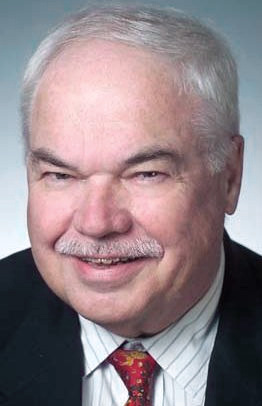 "GOD, at least in the West, is often represented as a man with a flowing beard and sandals. Users of the Internet might be forgiven for feeling that nature is imitating art — for if the Net does have a god he is probably Jon Postel" (The Economist, Feb. 1997) David W. Maher, Senior Vice President, Law and Policy of Public Interest Registry (PIR) offers his reminiscence of the early days of the Internet and attempts made to restructure the Domain Name System — an article he has entitled 'Reporting to God'. more
In a bid to bolster cybersecurity in India's financial sector, the Reserve Bank of India (RBI) has announced exclusive internet domains -- 'bank.in' for registered banks and 'fin.in' for non-banking financial entities. RBI Governor Sanjay Malhotra revealed that registrations for 'bank.in' will commence in April 2025, followed by 'fin.in', with the initiative aimed at reducing phishing attempts and fortifying digital banking trust. more
 Sometime by year-end, the UN General Assembly (UNGA) will vote on the proposed UN Convention Against Cybercrime. The treaty is opposed by most civil liberties organizations and Internet businesses, although the US position appears uncertain, mostly for reasons of foreign policy. more
 The FCA has been naming and shaming financial scam domains for decades. Its "warning list" is probably one the most extensive databases of its kind. But does it do a good enough job of actually warning people? Let us begin with the FCA website, which would not exactly get full points for user-friendliness: locating the "watch list" is a task in and of itself, to say nothing of consulting and scrutinising it. more
 While threat actors can use any domain across thousands of top-level domains (TLDs), they often have favorites. For instance, you may be familiar with Spamhaus's 10 most-abused TLDs for spamming. WhoisXML API researchers recently built on this list by analyzing 40,000 newly registered domains (NRDs) that sported some of the listed unreputable TLDs. We called this study "DNS Abuse Trends: Dissecting the Domains Under the Most-Abused TLDs." more
 A domain name consists of two main elements: the second-level domain name to the left of the dot - often consisting of a brand name or relevant keywords - and the domain extension or top-level domain (TLD) to the right of the dot. Domain names form the key elements of the readable web addresses allowing users to access pages on the internet and also allowing the construction of email addresses. more
A web domain name is the foundational piece of internet property allowing its owner (registrant) to construct and host an associated website. On a domain, the owner is also able to construct whatever subdomains they wish -- a process that is technically achieved via the configuration of records on the authoritative domain name system (DNS) server. more
 The EARN IT Act was reintroduced into Congress last Monday, with the promise that it would end Internet platforms' "blanket immunity" for "tens of millions of photos and videos" of child sexual abuse that they allow to circulate online. With the bill already scheduled for hearing in committee, it's on track to be passed quickly. And why shouldn't it be, if its sponsors' claims about it are true? Perhaps because they're not true. more
A World-Renowned Source for Internet Developments. Serving Since 2002.