
Welcome:
Login
|
Sign Up
|
About CircleID
Follow:
|
|
|

 Satellite internet is from backup to core infrastructure, as LEO constellations, non-terrestrial networks and direct-to-device services reshape connectivity, forcing governments and operators to rethink resilience, sovereignty and the architecture of the internet.
 Low Earth orbit is crowding as Starlink, Amazon, China and others race to deploy thousands of satellites, promising faster broadband while intensifying global competition, orbital congestion concerns and a push for direct-to-device connectivity.
 SpaceX has filed a plan to place more than a million satellites in low Earth orbit, recasting data centres as spaceborne infrastructure while testing regulators, safety, competition and the line between vision and paper ambition.
AT&T’s CEO plays down the threat of satellite cellular, citing bandwidth and coverage limits. Yet growing interest in rural and IoT applications suggests the technology could still claim valuable niches in the wireless market.
Global internet use has surpassed six billion users, yet stark divides persist between regions, genders and urban-rural populations. Meanwhile, download speeds have surged and smartphones now dominate how people access the web worldwide.
As smartphones become the primary gateway to the internet for billions, a critical question emerges: does app-based digital fluency prepare users for the demands of computer-based work in a modern economy?
 Telecom operators are challenging OTT platforms by deploying Rich Communication Services. This reversal of roles prompts fresh regulatory scrutiny, revives the case for network neutrality, and demands a risk-based approach to preserving digital competition.
 Artificial intelligence is transforming Africa's informal economy by improving access to finance, optimizing business operations, and helping small-scale entrepreneurs transition into the formal sector, despite challenges such as digital illiteracy and infrastructure gaps.
Over two years of war, Israel has decimated Gaza's ICT infrastructure, crippling connectivity, impeding emergency response, and isolating civilians from the digital world, while cementing long-standing control over telecommunications under the guise of national security.
 Earlier this week, Poland’s new President, Karol Nawrocki, vetoed amendments to the Act on Assistance to Citizens of Ukraine, provoking debate over critical satellite connectivity. Deputy Prime Minister and Minister of Digital Affairs Krzysztof Gawkowski warned that the veto “de facto switched off Starlink for Ukraine,” potentially disrupting connectivity for hospitals, schools, and government operations.
 On 17 May 1865, 20 European states convened to establish the International Telecommunication Union (ITU) to streamline the clunky process of sending telegraph messages across borders. 160 years later, ITU's anniversary is more than a mere commemorative moment; it is a stark reminder that multilateral cooperation is beneficial and necessary in our increasingly interconnected world.
 The debate surrounding network usage fees in Brazil has intensified following the approval of Bill 469/2024 by the House of Representatives' Communications Committee in early December 2024. This bill prohibits telecommunications operators from charging internet companies based on data traffic. While this is merely a preliminary step in a lengthy legislative process, it signals that proposals from telecom companies to implement network usage fees are unlikely to gain traction.
There was a burst of recent press about cellular service provided from satellites. This was probably prompted by the two recent hurricanes that have disabled terrestrial cellular and broadband networks in the southeast. I've seen speculation and discussion on Reddit and other forums where people have been wondering if satellite is the future of cell service and if the ubiquitous giant cell towers will eventually become obsolete.
Ookla recently tackled this question in one of its research articles. Ookla compared the time it takes to load pages for Facebook, Google, and YouTube on cellphones using 4G LTE networks versus 5G networks. Ookla thinks that page load speed is a great way to measure cellphone experience. The time needed to load a web page is directly impacted by latency, which measures the lag between the time a phone requests a website and that website responds.
There are many inconvenient truths about radio spectrum sharing and transceiver interoperability that require full ventilation and resolution. Spectrum users want exclusive access and - news flash - they do not like to share! Campaign events, like the Trump Bulter, PA rally, require short notice, forced cooperation between and among federal, state, and local law enforcement officers, as well as a variety of other government agencies.
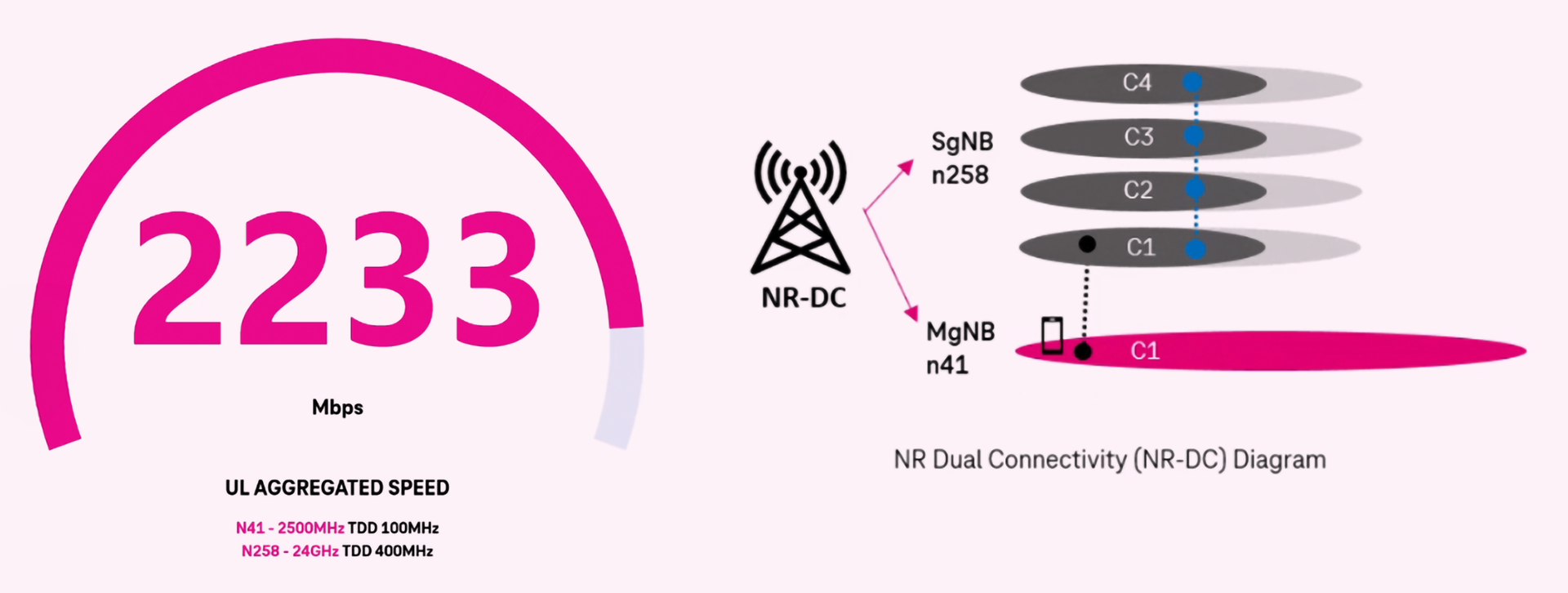 T-Mobile Breaks Upload Speed Record with New 5G Dual Connectivity
 FCC Approves Starlink for Direct-to-Cell Service in Hurricane-Stricken North Carolina
 SpaceX Launches Starlink Satellites for Global Cellular Coverage
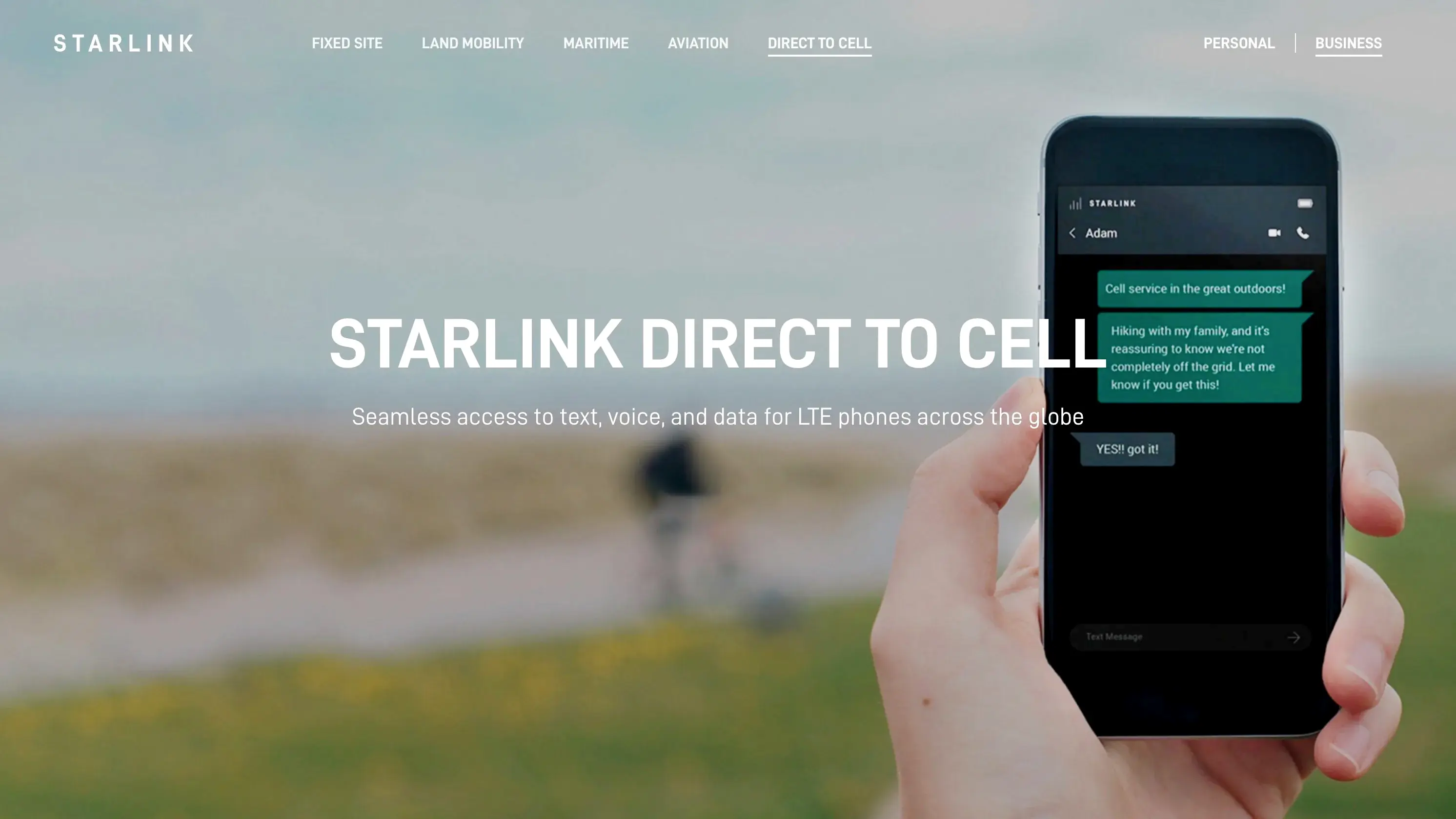 SpaceX Quietly Launches New Website for Cellular Starlink Service
 Ukraine’s Increasing Dependence on Starlink Sparks Concern Over Musk’s Unilateral Control
 IEEE Approves 802.11bb Standard, Boosting Global Adoption of Light-Based Li-Fi Communications
 Amazon Announces Project Kuiper Customer Terminals with Speeds up to 1Gbps
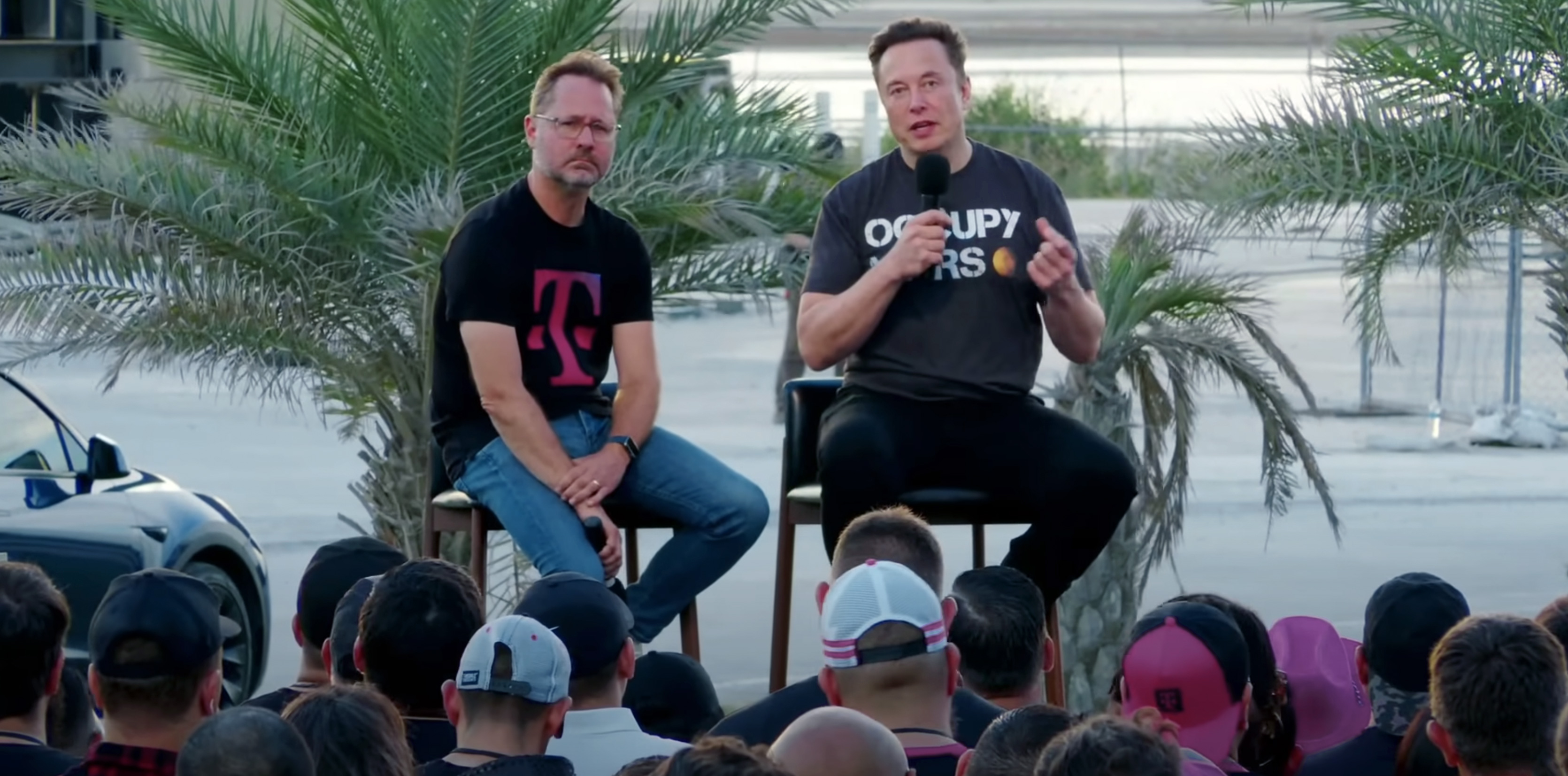 SpaceX and T-Mobile to Test Satellite-To-Cell Service This Year
A World-Renowned Source for Internet Developments. Serving Since 2002.