Welcome:
Login
|
Sign Up
|
About CircleID
Follow:
|
|
|

IPv4 Markets |
Sponsored by |

|

 This essay argues that Internet governance has drifted from technical coordination into unaccountable institutional power, and proposes "Running-Code Primacy" as a post-RIR framework grounded in distributed validation, interoperability, and voluntary adoption rather than registry authority.
 As AFRINIC rebuilds after years of litigation, the Number Resource Society is urging members to sign powers of attorney, raising fears that coordinated advocacy, commercial interests and geopolitical pressures could reshape African control over critical internet resources.
 The history of the Regional Internet Registry system shows it was designed as a community-governed framework, not a passive ledger, with legitimacy rooted in delegated authority, open policy development, and multistakeholder coordination from its inception.
AFRINIC's fight over 6.2 million IPv4 addresses exposes how legal pressure, offshore vehicles and scarcity economics can strip Africa of leverage, turning a technical dispute into a test of sovereignty, institutional resilience and Internet governance.
 LACNIC's LAC-2025-5 proposal formalises IPv4 sub-assignments, bringing grey-market leasing into a framework, easing scarcity pressures, improving registry accuracy, and lowering barriers for smaller providers while preserving incentives to adopt IPv6, across Latin America and Caribbean.
Private internet registries have inflated narrow technical roles into quasi-sovereign authority, laundering mandate through ritual and rhetoric; a fragile system now faces legal, economic and political reckoning, prompting calls for coordinated transition urgent global reform.
Africa's push toward IPv6 cannot bypass IPv4 scarcity, as uneven infrastructure, market dynamics, and governance disputes raise costs, entrench inequality, and risk turning transitional address shortages into a lasting brake on digital development across regions.
A dispute over African IP governance exposes a flaw in the RIR system, where thin policy, weak accountability and institutional self preservation risk overriding running networks and undermining the technical legitimacy that sustained global coordination.
Afrinic crisis exposes how legal pressure, proxy advocacy and owned media reshape narratives, potentially threatening global internet registry governance and shifting Africa's IP resources from public stewardship toward market commodification with broader far-reaching institutional consequences.
Critics blame IPv4 markets for inequality, but registry rules long rewarded scale and imposed regressive costs. Scarcity was managed, not equalized, leaving poorer networks paying more for slower, less predictable access over time and regions.
 After a prolonged slump, IPv4 prices are rising as tightening supply meets sustained demand from cloud and AI infrastructure, signalling a market correction and diminishing opportunities for buyers who had delayed acquisitions.
 Falling IPv4 prices in 2026 reflect not collapse but maturation, as hyperscaler demand wanes, buyers diversify, and leasing expands, turning scarce addresses into managed assets shaped by liquidity, flexibility, and infrastructure driven needs today increasingly.
Regional internet registries, once coordinators of technical scarcity, now effectively cap liability at $100 while retaining control over national numbering systems, shifting risk to states and entrenching a governance model critics argue today inverts sovereignty.
 Fifteen years after IPv4 exhaustion, a transfer market has reallocated scarce address space, enabling internet growth, despite uneven registry policies, opaque fees, and lingering resistance to a system that proved more pragmatic than planned reclamation.
Regional Internet registries, built for coordination, now sit atop scarce IPv4 assets while bearing little liability, suppressing capitalization and imposing "double extraction" that weakens operators, distorts markets and threatens the stability of global internet uniqueness.
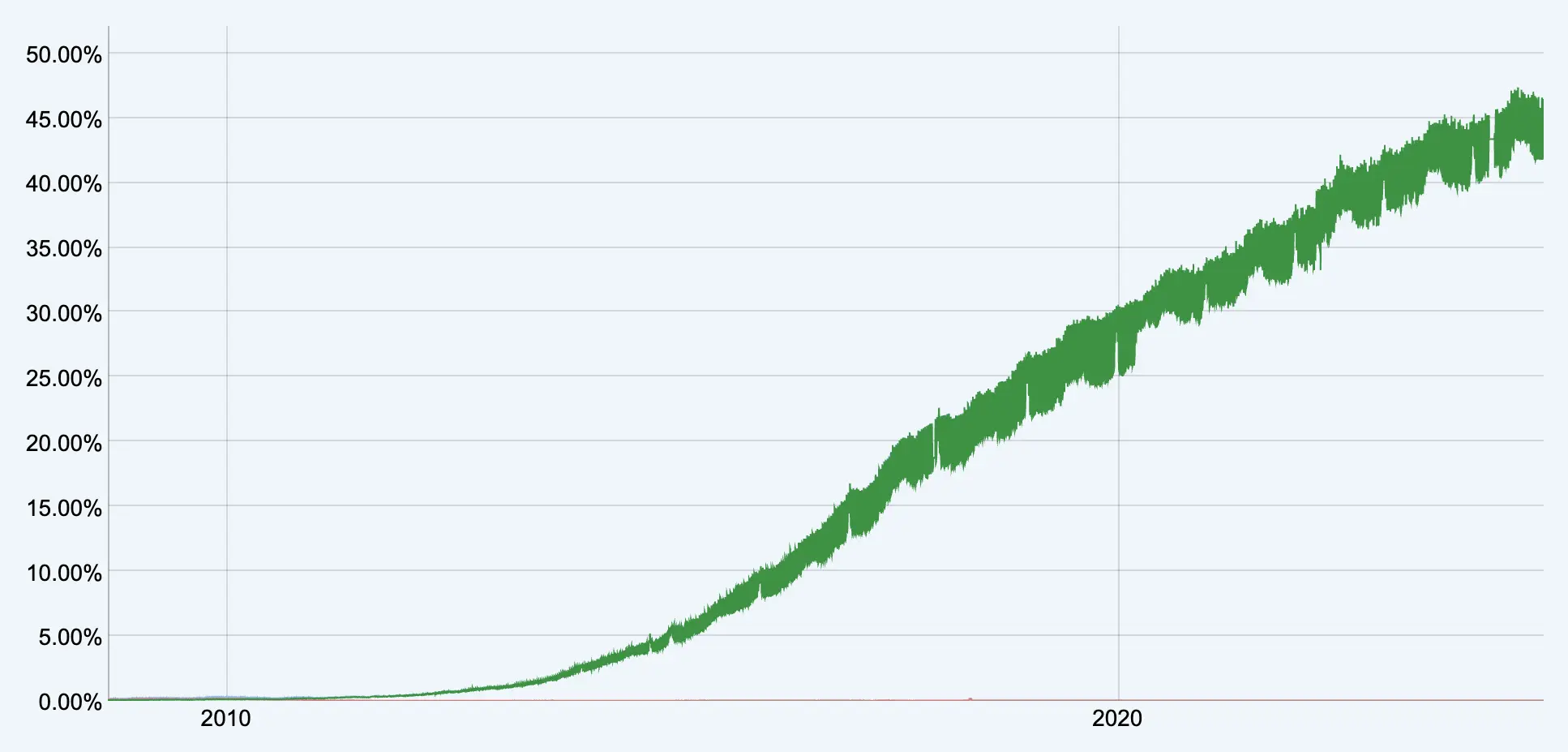 IPv6 Transition Stalls as Internet Moves Beyond IP Addresses
 Close to 735K Fraudulently Obtained IP Addresses Have Been Uncovered and Revoked, ARIN Reveals
After months of decline, the IPv4 market is showing signs of stabilization. April pricing held steady across block sizes as resilient demand, broader transaction activity, and improving buyer confidence pointed toward a more constructive market environment through 2026. more
After months of declining prices, the IPv4 market shows early signs of stabilisation, with firming prices, resilient global demand, and sustained transaction volume suggesting a gradual rebalancing rather than a structural downturn. more
IPv4 prices continued to decline through 2025, particularly for large blocks, yet demand remained resilient as buyer participation broadened, liquidity improved, and the market transitioned toward more efficient price discovery entering 2026. more
In 2025, IPv4 address prices declined to decade lows, but market activity remained strong. Rising buyer participation and steady transaction volume signaled a resilient, well-functioning market entering 2026 with confidence. more
Despite falling IPv4 address prices throughout 2025, transaction volume and buyer activity remained strong. Expanding demand, growing liquidity, and healthy fundamentals suggest a stable, functioning market heading into 2026. more
IPv4 address prices continued their gradual decline in November, with small and medium blocks narrowing the gap with large blocks. Despite falling prices, transaction volume and buyer demand remain strong heading into 2026. more
IPv4 address prices continued to decline through Q3 2025, yet steady demand and strong supply are keeping the market active. Smaller blocks remain more resilient as larger allocations face sharper pricing pressure. more
A World-Renowned Source for Internet Developments. Serving Since 2002.