
Welcome:
Login
|
Sign Up
|
About CircleID
Follow:
|
|
|

Report describes a technique with which public wifi can be used to identify in-baggage dangerous objects in public spaces that don't typically have affordable screening options. more
 ETECSA, Cuba's monopoly ISP, has been running free tests of their forthcoming mobile access. It seems that the latest test is over for now, but Andy Garcia (@Dancuba96) ran a speed test before it ended... ETECSA has not announced when commercial 3G service will commence, where it will be available at first and what it will cost, but the following image at the start of the @ETECSA_Cuba Twitter page suggests that service will begin soon they are serious about mobile #Internet access. more
Cuba's government provided free internet to more than 5 million cellphone users on Tuesday as an eight-hour test prior to launching sales of the service. more
Internet Engineering Task Force (IETF) has announced the official release of TLS 1.3. more
 Challenging UDRP awards in actions under the Anticybersquatting Consumer Protection Act (ACPA) is infrequent though steady. There are currently a number of court filings in U.S. district courts that are in the early stages, most notably the ADO.com case reported on in an earlier essay and several others have either been referred to mediation (the IMI.case) or settled or discontinued. more
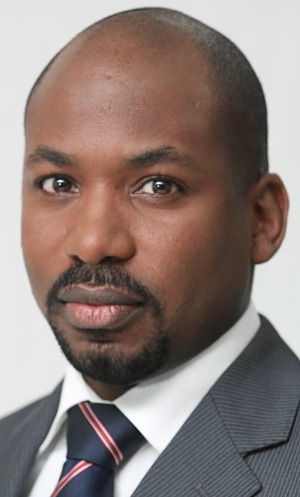 Regenie Fräser, the former Secretary General of a regional trade association, has been selected to serve a one-year term on the board of trustees of the American Registry of Internet Numbers (ARIN). Fraser's appointment makes her the first person from the Caribbean and the first non-white person to serve on the ARIN board. ARIN is one of five registries worldwide that coordinate Internet number resources. more
"The latest development in Yemen's long-running civil war is playing out in the global routing table," Doug Madory reports in a blog post today from Oracle's Internet Intelligence unit. more
 The FCC Commissioner Michael O'Reilly's recently contributed opinion on the ITU in "The Hill" is beyond bizarre. It also sadly displays an appalling lack of knowledge of the organization and its history. I find it disturbing - as someone who held senior positions at both the FCC and the ITU and wrote the organization's history - how fundamentally ignorant an FCC Commissioner could be today of the global telecommunications ecosystem. more
The two major providers of arbitration services for adjudicating cybersquatting complaints under the Uniform Domain Name Dispute Resolution Policy (UDRP), the World Intellectual Property Organization (WIPO) and Forum, issue daily lists of decisions. In approximately 90% of those disputes, the registrations cannot be described as anything less than mischievous in acquiring second level domains incorporating well-known or famous marks. more
With each passing day, a new public opinion article appears or U.S. government official pronounces how the open internet is abetting some discovered catastrophic effects on our societal institutions. In just one week, the examples include increased information on FSB & GRU attacks on electoral systems and infrastructure, Trump's obliging tactical destruction of societal norms and propagation of the QAnon cult, U.S government agency officials playing "cyber security spin-the-bottle" at press conferences... more
Google built its first Southeast Asia data center in Singapore back in 2011 and quickly expanded to a second building in 2015. more
"ICANN holds .islam, .halal in limbo despite losing case," reports Kieren McCarthy in The Register. more
What is the intrinsic (as opposed to trademark) value of short string domain names? It depends, of course. Rights holders have been willing to challenge domain name registrants even if they have no actionable claim for cybersquatting... UDRP Panels have over the years, and in many cases, affirmed that short strings are "inherently valuable in themselves precisely because they are (a) short and (b) can reflect a wide range of different uses." This does not mean it is open season against rights holders for short strings, but it does mean the facts and proof of cybersquatting must be in proper alignment, and this calls for some sober thinking about the evidentiary demands of the Uniform Domain Name Dispute Resolution Policy (UDRP). more
 Veteran domain investor Abner Duarte from PremiumDomains.com.br is featuring a new event called Domaining Americas, to be held in Rio de Janeiro, Brazil, in October 2018. He is puting together a major domain conference for South America. The debut edition of Domaining Americas will be held at the five-star Grand Hyatt Rio De Janiero on Saturday and Sunday, October 6-7, 2018. more
In the rather unique world of public international law for cybersecurity, the treaty provisions of the International Telecommunication Union (ITU) stand alone. They form the multilateral basis for the existence of all communication networks, internets, and services worldwide and have obtained the assent by every nation in the world. They also contain the only meaningful multilateral cybersecurity provisions that have endured over a century and a half through all manner of technological change. more
A World-Renowned Source for Internet Developments. Serving Since 2002.