

 Over the next two years, several global dialogues about our shared digital future are taking place -- and big changes could be in the cards. An intensive series of negotiations will see United Nations (UN) Member States weigh in on the future of digital cooperation -- and multistakeholderism finds itself under the spotlight. The multistakeholder model allows everyone who has a stake in the internet to meaningfully engage in discussions and decisions about its future on equal footing, but a number of critics are calling for change. more
 In today's digital age, the Internet is a ubiquitous presence in our lives, playing a pivotal role in how we communicate, work, learn, and entertain ourselves. However, the convenience and benefits of the Internet come with a hidden cost to the environment, which is often overlooked by end users. This article explores the environmental impact of online activities and highlights the importance of adopting more sustainable digital practices. more
 The EU has once again turned its attention to domain name registration data (WHOIS) -- this time reinforcing requirements to collect, maintain, verify, and disclose WHOIS for IP enforcement purposes through its "Commission Recommendation" on measures to combat counterfeiting and enhance the enforcement of IP Rights. Published last month, this regulatory action demonstrates the EU's commitment to restore WHOIS despite... more
 The U.S. Anticybersquatting Consumer Protection Act ("ACPA") is a federal law -- part of the Lanham Act that deals with trademarks and unfair competition. It says that a person can be liable if he or she registers a domain name that contains another's distinctive trademark with a bad faith intent to profit from that mark. One issue that has arisen over the years is whether registration that can give rise to liability means only the first time the domain name is registered, or whether it applies to the re-registration... more
 It's incredibly hard to keep things private in the new digital age. There are far too many stories circulating about people who talked to a friend on the phone or texted about something and almost instantly got hit with ads for the subject of the conversation. And that happens without malware - no telling what information you're giving out if your devices have been infected with malicious software that is spying on you. more
I've read several articles coming out of the Mobile World Congress trade show in Barcelona, Spain, and one of the common threads is that there was a lot of talk about 5.5G (or 5G Advanced) - the next iteration of 5G. My first question on reading about this was to ask what new features are being discussed that were not part of the original announced promises of 5G. I went back and read a few of my blogs and other articles that were written when 5G was first announced. more
 On 29 March 2024, an announcement was posted notifying the world that the Open-Source Software (OSS) package "xz-utils," which includes the xz data compression program and a library of software routines called "liblzma" and which is present in most Linux distributions, had been compromised. The insertion of the compromised code was done by "Jia Tan", the official maintainer of the xz-utils package. more
 During CSG Open Working Session at ICANN79, Members from the ICANN Community were invited to an open meeting to share their experiences with Registration Data Request System (RDRS) from the Requestor side. As President of the Edgemoor Research Institute (ERI), I had the honor to present the keynote address and I am pleased to be able to provide you with ERI's report of the meeting. more
In the digital era's transformative landscape, the intersection of Internet Governance and Sustainable Development emerges as a focal point for global discourse. It is widely recognized that the Internet, in its vast potential, holds the key to unlocking solutions for many of the challenges we face. However, this potential could be significantly underutilized, or worse, lead to adverse effects without a robust governance framework. more
 In 2021, the story was price. In 2022, the story was price and large block supply. The story in 2023 is decline -- but with a notable caveat. Spurred by unprecedented unit pricing, the North American IPv4 market in 2022 experienced its second-best year in terms of overall traded volume, and in both 2022 and in 2023, large block market activity was as robust as ever, with sellers trading large blocks at over $50 per number. more
 The most contentious issue throughout negotiations was that of scope—whether the Convention would cover the private sector at all, and if so, to what extent. Leaks of the negotiations and commentary by journalists indicate that several states, primarily the United States, were keen to see the Convention not directly applying to private entities. more
Today's blog talks about a critical part of the broadband network that most people don't know about -- carrier hotels. These are locations that have been created for the specific purpose of allowing carriers to connect to each other. The need for carrier hotels became apparent in the year after the passage of the Telecommunications Act of 1996. That new law allowed local competition for telephone service. more
The unveiling of the Global Digital Compact's (GDC) zero draft on April 1, 2024, heralds a critical juncture in the quest to frame a digital future that is equitable, secure, and human-centered. Orchestrated under the leadership of UN Secretary-General António Guterres, the initiative endeavors to forge a consensus-driven framework for global digital cooperation. more
 The IPv4 market has created serious interest in the protocol far beyond the natural confines of networking professionals. These assets are worth a lot. Marketplaces, IPv4.Global's especially, have grown to be large centers of asset transfer by buyers and sellers of IPv4 addresses. IPv4.Global has helped transfer over $1 billion in IPv4 blocks. more
During the ICANN79 in San Juan, Puerto Rico, in March 2024, the North America School of Internet Governance (NASIG 2024) convened with an over-encompassing theme, "Confronting Truth, Trust, and Hope in Internet Governance." A pivotal panel discussion titled "Can We Survive Digital Fragmentation?" underscored the essentiality of global connectivity and the urgency to understand and address the layers of fragmentation impacting the internet's universal fabric. more
 Scientists Set New Internet Speed World Record: 4.5 Million Times Faster Than Average Broadband
 Biden Administration Alerts Governors to Rising Cyber Threats on U.S. Water Systems
 Ransomware Crisis in U.S. Healthcare
 China’s Satellite Internet Ambitions: A Quest to Rival SpaceX
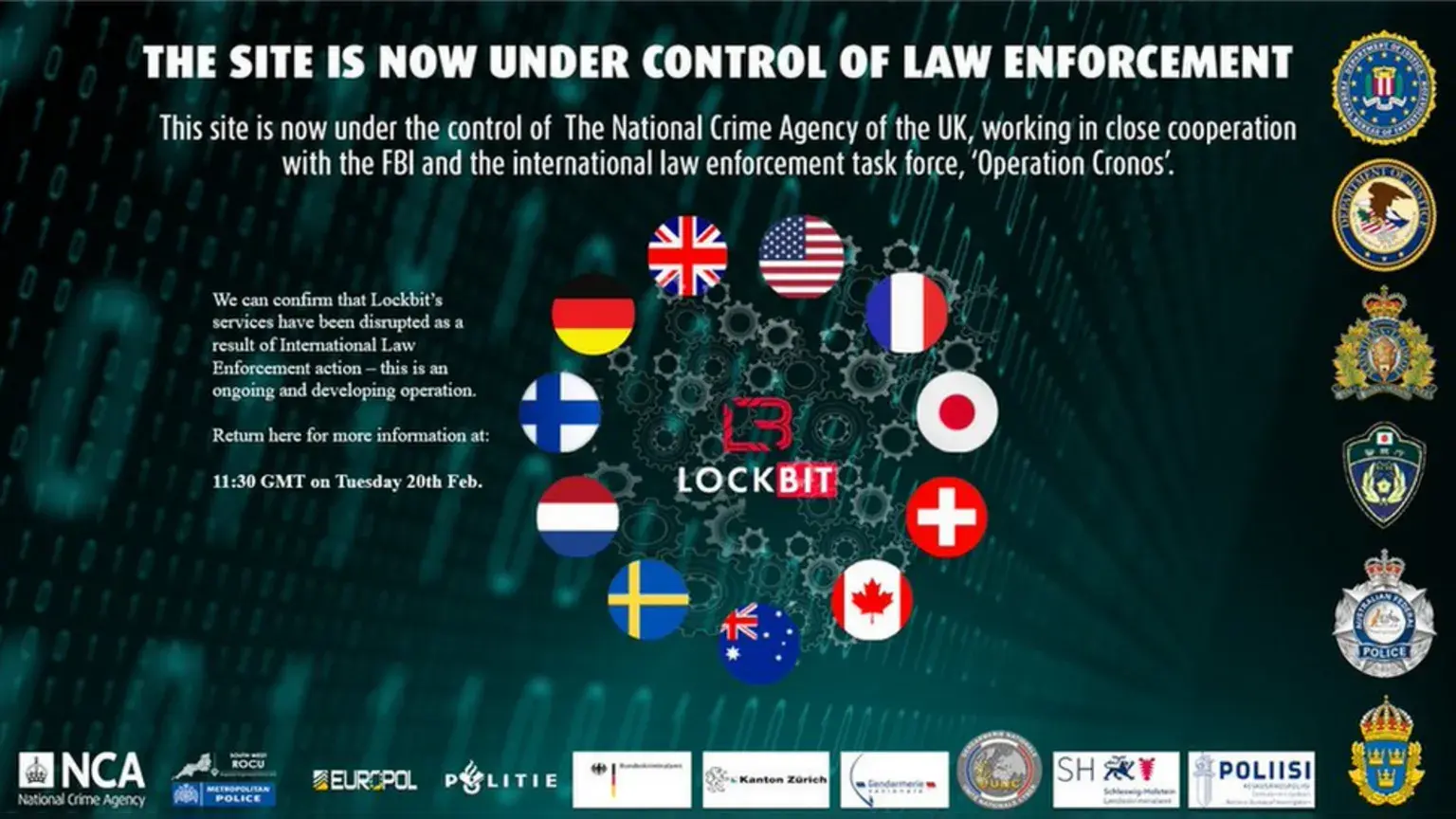 Global Law Enforcement Strikes Major Blow Against LockBit Ransomware Operation
 Millions of Smart Toothbrushes Hijacked in Cyberattack on Swiss Firm
A World-Renowned Source for Internet Developments. Serving Since 2002.