New TLDs |
Sponsored by |

|


 In today's rapidly evolving internet landscape, staying up-to-date with the latest developments and trends is crucial for businesses looking to strengthen their online presence. One highly anticipated development that organizations have eagerly awaited is the next round of new generic Top-Level Domains (gTLDs). more
 In May of this year, I questioned whether the continued legal maneuvering of a company called Altanovo Domains Ltd. (Altanovo) could further delay the launch of .web. After reading its second Independent Review Process (IRP) complaint, and ICANN's response, it seems that the unfortunate answer is a resounding "yes," or at least that is Altanovo's intent. more
 DOTZON presents the sixth edition of the Digital Company Brands study. After having introduced the study in 2018, DOTZON continued to expand and enhance the underlying data to display how companies successfully use their Digital Company Brands. The Digital Company Brand is the digital dimension of a company brand and mirrors the "digitalness "of a company. more
 This open letter, penned by Rami Schwartz, the CEO of Latin American Telecom LLC, addresses Universal Acceptance issues related to the .TUBE top-level domain (TLD). Published to the ICANN Board, it highlights challenges faced in making .TUBE domains function correctly in popular messaging apps like WhatsApp. more
We've just published the 2023 edition of the DOTZON study "Digital City Brands." After introducing the study in early 2017, DOTZON has mapped how successful cities are using their Digital City Brands for the seventh year in a row. The Digital City Brand is the digital dimension of the City Brand and mirrors the "Digitalness" of a city. The advent of the Internet was why Digital City Brands came into being in the first place. more
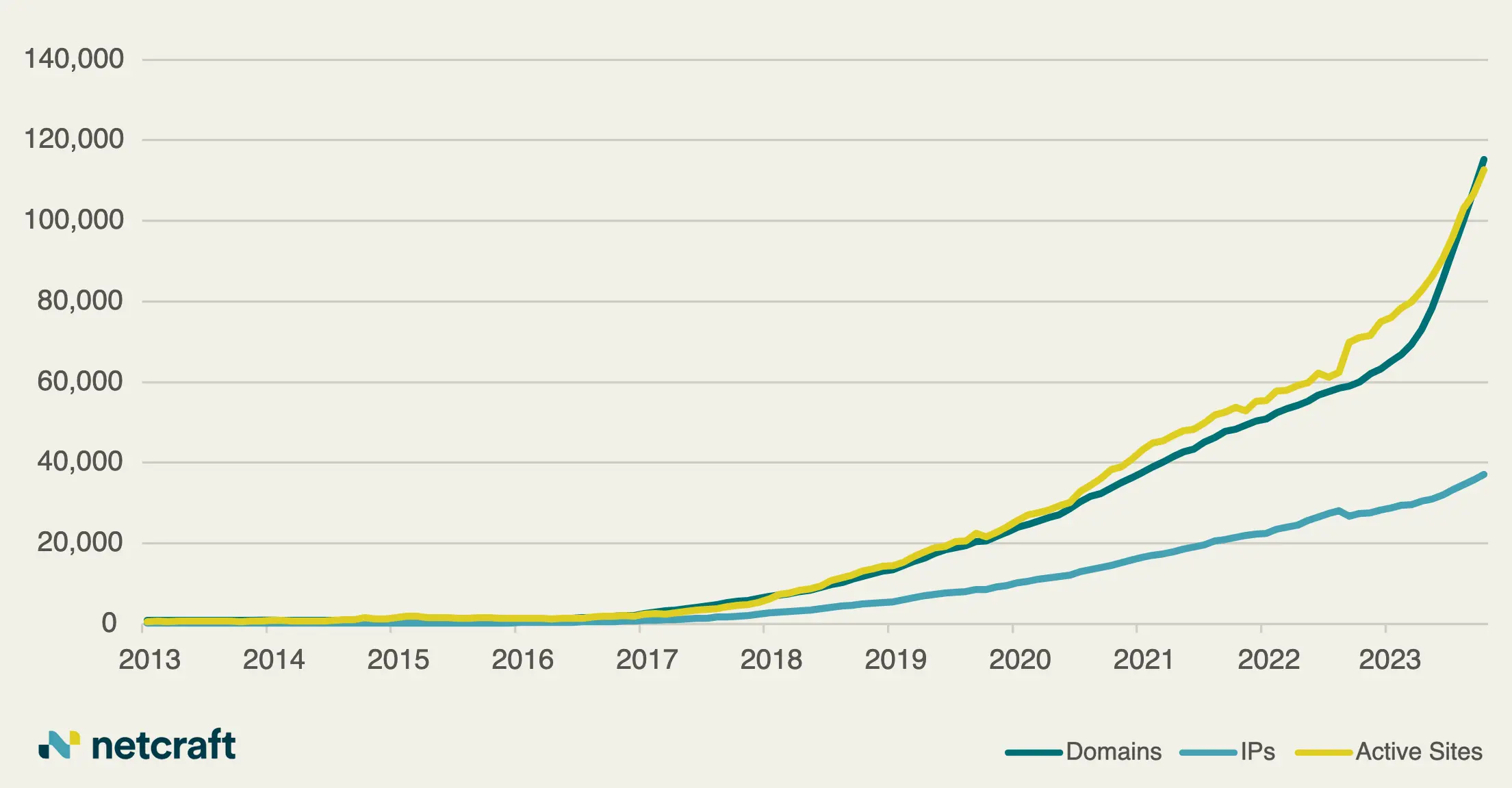
 On the sunny beaches of Anguilla -- a small island of just 35 square miles -- I'm sure artificial intelligence (AI) is the last thing people are thinking about. The primary industries of Anguilla, set in the Leeward islands in the Caribbean, are tourism and offshore banking. However, this nation has been assigned the country code top-level domain (ccTLD) .AI -- which is being repurposed to represent artificial intelligence. more
he launch of .web top-level domain is once again at risk of being delayed by baseless procedural maneuvering. On May 2, the Internet Corporation for Assigned Names and Numbers (ICANN) Board of Directors posted a decision on the .web matter from its April 30 meeting, which found "that NDC (Nu Dotco LLC) did not violate the Guidebook or the Auction Rules" and directed ICANN "to continue processing NDC's .web application," clearing the way for the delegation of .web. more
 The Domain Name System (DNS, aka Web 2) and Web3 platforms are two different naming systems available to internet users. While the DNS (Web2) has been a reliable and trusted internet standard for decades, Web3 platforms (such as ENS, Handshake and Unstoppable) are a relatively new technology deployment that presents unique and different features. more
 The year 2022 was a turning point. We started emerging from the covid emergency and could return to traveling and meeting our peers at industry events worldwide. But it was also a year of taking stock, with numbers returning to pre-covid levels. After two years of sky-high domain registrations, figures returned to pre-pandemic levels in 2022. The domain sector shows a good mix of strength and adaptability to change compared to other industries. more
 As many in the ICANN community prepare to depart for the sunny beaches of Cancun, Mexico, it appears the ICANN 76 meeting could be significant when it comes to the long-awaited next application window for gTLDs. It's been over 11 years since applicants were last able to apply for a gTLD (and some of those strings are still launching into the marketplace all these years later), and the community work to review that initial process has never really stopped. more
 While threat actors can use any domain across thousands of top-level domains (TLDs), they often have favorites. For instance, you may be familiar with Spamhaus's 10 most-abused TLDs for spamming. WhoisXML API researchers recently built on this list by analyzing 40,000 newly registered domains (NRDs) that sported some of the listed unreputable TLDs. We called this study "DNS Abuse Trends: Dissecting the Domains Under the Most-Abused TLDs." more
DOTZON presents the fifth edition of the Digital Company Brands study. After having introduced the study in 2018, DOTZON continued to expand and enhance the underlying data to display how companies successfully use their Digital Company Brands. The Digital Company Brand is the digital dimension of a company brand and mirrors the "digitalness "of a company. Purely digital company brands developed for the first time in the 1990s with the emergence of Internet business models. more
 Blockchain domain names, domains that are stored on blockchain or cryptocurrency exchanges, are part of a growing, unregulated, and decentralized internet. Right now, blockchain domains are used mostly by cryptocurrency users, but they are growing in popularity - the Ethereum name service reported over 2.2 million .eth domain name registrations in 2022. At the same time, crypto scams are also exploding, reaching a total of $3.5 billion in losses in 2022. more
 In the first article of this two-part blog series, we looked at how frequently domains were used by bad actors for phishing activity across individual top-level domains (TLDs) or domain extensions, using data from CSC's Fraud Protection services, powered by our DomainSecSM platform. In this second article, we analyze multiple datasets to determine the highest-threat TLDs, based on the frequency with which the domains are used egregiously for a range of cybercrimes. more
A domain name consists of two main elements: the second-level domain name to the left of the dot - often consisting of a brand name or relevant keywords - and the domain extension or top-level domain (TLD) to the right of the dot. Domain names form the key elements of the readable web addresses allowing users to access pages on the internet and also allowing the construction of email addresses. more
 Rise in Cybercrime Exploiting Artificial Intelligence Hype Leads to Growing Threats Within the .ai Domain Space
 Phishing Attacks Surge Despite Increased Awareness, New Strategies Needed
 Hal Lubsen, Industry Leader and Former CEO of Afilias, Has Passed Away
 ICANN’s Recent .amazon Decision Denounced by Presidents of Peru, Colombia, Ecuador and Bolivia
 ICANN Says Amazon Inc’s Application for .AMAZON TLD Can Proceed Following 30 Days of Public Comment
Radix has launched a free branding tool for creators who use link-in-bio services. The new tool transforms clunky and ordinary links-in-bio (or bio-links) such as ‘linktr.ee/johndoe123’ into branded links such as ‘www.johndoe.online’ for free. more
Earlier this month, an independent 12-month SEO study conducted by an eCommerce marketing agency revealed that the eCommerce businesses using .Store domains got 87% more traffic and a 12% lower cost per conversion. more
Radix announced the sale of the domain betting.online for $400,000. The sale was directly done via the registry and was facilitated by escrow.com. This is the highest* sale in the last 5 years for any new gTLD and ties the spot for the 5th highest* domain sale YTD among all TLDs in 2023, as per DNJournal. more
Radix has shared its bi-annual premium report for the first half of 2023, giving a complete overview of the premium domain sales across its new TLD portfolio. more
Radix today announced the beginning of its invite-only Request for Proposal (RFP) process for the selection of a Registry Service Provider (RSP). Radix currently manages over 7 million domains across extensions that include .Online, .Store, .Tech, .Website, .Space, .Press, .Site, .Host, .Fun, .Uno, .Pw and .In.net. more
In the first week of April, Radix's .Online Domains launched the Spotlight.online contest to support women entrepreneurs in South Florida. more
Avid philanthropist, entrepreneur, and creator, MrBeast, AKA Jimmy Donaldson, has switched his official merch store from shopmrbeast.com to the more intuitive mrbeast.store. He announced his move to the .Store domain in his most recent video, which garnered close to 70M views in less than 3 days. more
A World-Renowned Source for Internet Developments. Serving Since 2002.