

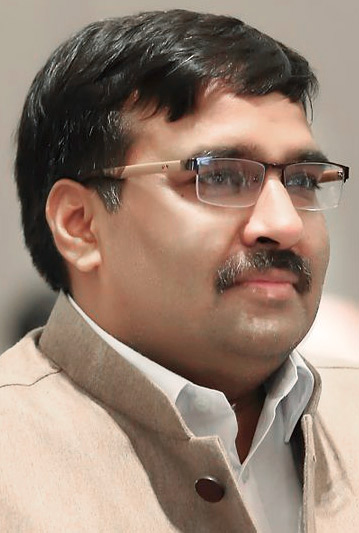
 An IDN is a domain name which uses a particular encoding and format to allow a wider range of scripts to represent domain names such as Gujarati, Arabic, Chinese, Cyrillic, Devanagari and many more scripts. In simple words, a domain name with non-English characters will be called an Internationalized Domain Name. Humans have a variety of languages and alphabets that are familiar to them, and domain names do too. IDN unlocks an increased familiarity and affinity for humans. more
 Recently I've been working on Email Address Internationalization (EAI), looking at what software is available (Gmail and Outlook/Hotmail both handle it now) and what work remains to be done. A surprisingly tricky part is assigning EAI addresses to users. In traditional ASCII mail, the local part of the address, what goes before the @ sign, can be any printable ASCII characters. more
 One challenge for all new top-level domains (TLDs) is the so-called Universal Acceptance. Universal Acceptance is a phenomenon as old as TLDs exist and may strike at many occasions... The effect when universal acceptance hits you is that you cannot send or receive email, get error messages or even worse when it looks like everything works but it does not and you do not even get a notification. more
 Neustar, a leading provider of registry services, is hosting a Town Hall meeting this month for the United States' country code Top-Level Domain, .US. Neustar introduced the .US Town Hall last year to reflect our commitment -- and the Commerce Department commitment to the bottom-up, multistakeholder model of DNS management. The public forum is an important part of ensuring that .US continues to be a vibrant namespace that reflects America's diversity, creativity, and innovative spirit. more
 In the 1980's internet connectivity meant allowing general public to communicate and share knowledge and expertise with each other instantly and where it was not possible otherwise. Take the story of Anatoly Klyosov, connecting Russia to the western world for the first time in 1982, as an example. A bio-chemist who was not allowed to leave the soviet territory for security reasons. The internet enabled him to participate in meetings with his counterparts at Harvard University, University of Stockholm and beyond. more
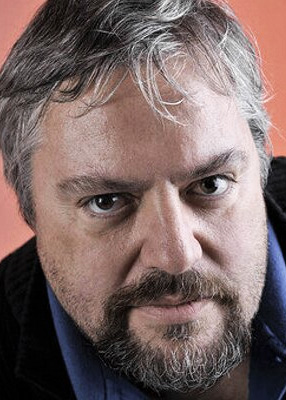 Come join the discussion on Wednesday 17:15 UTC. Quis custodiet ipsos custodes? As ICANN approaches its 18th birthday, it marks its ascension to adulthood and independence with a new framework of accountability. As we attempt to modernize and empower the organization with oversight of the DNS, the question of "who watches the watchmen?" is on the tip of everyone's tongue. more
 Over the past decade Simplified Chinese has grown to become one of the most popular languages on global websites, second only to English. According to the Web Globalization Report Card, which has long monitored languages supported by the world's leading brands, Chinese was seen on only about six out of ten websites in 2006. Today, it is seen on virtually every global website. more
 Since ????. (.web in Arabic and pronounced "dot shabaka") launched as the world's first new Top-Level Domain in 2014, we've faced many hurdles in growing adoption of Arabic domain names. From universal acceptance and general awareness issues to a lack of Registrars with Arabic retail interfaces -- the challenges have been numerous and varied. However, according to a new ICANN-commissioned study released this week - one of the first to investigate the Middle East DNS sector - there is much to celebrate too. more
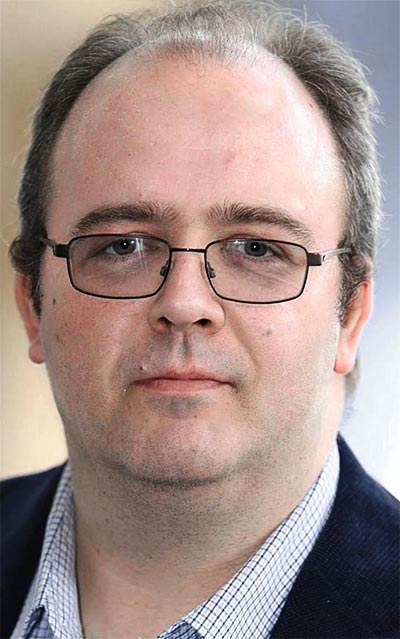 EURid, who run the .eu registry, have finally been delegated .?? (Cyrillic for .eu). Punycode xn--e1a4c. One of the things that EURid is chartered to do under its contract to the European Commission was to get the extension in scripts other than Latin. EURid used ICANN's IDN ccTLD "Fast Track" process, though whether the process is truly "fast" or not is debatable, as it is still quite a long process. more
 Last week I asked on a post elsewhere, why we, at the MLi Group, chose to consider speakers, panelists, supporters and sponsors at our Global Summit Series (GSS) as "Thought Leaders" and "Trend Setters? Many wrote me directly offering their answers and then it dawned on me that my answer may (or may not) get appreciated by many at the ICANN community. So here is why we do. more
A World-Renowned Source for Internet Developments. Serving Since 2002.