
Welcome:
Login
|
Sign Up
|
About CircleID
Follow:
|
|
|

 Universal Acceptance Day 2026 marks progress toward a multilingual internet, as UNESCO and ICANN deepen cooperation. Yet unresolved implementation failures and weak registry stewardship still hinder truly inclusive digital access worldwide.
 Across Asia Pacific, millions are excluded from digital services because systems fail to recognise non Latin scripts, exposing how flawed design assumptions about internet users entrench inequality across the region in welfare, finance and education.
India's digital welfare systems, built without universal acceptance, have excluded millions from vaccines, wages and food, revealing how technical design choices can entrench inequality and reshape access to basic rights across rural regions today in India.
 A debate over aligning internet and AI governance reveals stark differences in origin, incentives and power. While lessons from ICANN's multi-stakeholder model endure, AI's corporate dominance and geopolitical rivalry demand new, bottom-up approaches.
 Artificial intelligence is transforming Africa's informal economy by improving access to finance, optimizing business operations, and helping small-scale entrepreneurs transition into the formal sector, despite challenges such as digital illiteracy and infrastructure gaps.
 Around the world, communities are racing to close the digital divide. From fiber deployments in rural areas to affordable smartphones and digital skills training, the goal is clear: connect the unconnected. But as we pursue that goal, a deeper question emerges that demands just as much urgency as infrastructure: When people get online, can they actually participate in the digital world?
 For companies with global aspirations, Russian has long been considered a "must support" language. These days, that is no longer the case. But even before Putin decided to invade Ukraine, the Russian language had been slipping, ever so slightly, in global website support. While support for Ukrainian has been steadily rising. I’ve been tracking the languages supported by the leading global brands for nearly 20 years and...
 Earlier this year, the Internet Engineering Task Force’s (IETF’s) Internet Engineering Steering Group (IESG) announced that several Proposed Standards related to the Registration Data Access Protocol (RDAP), including three that I co-authored, were being promoted to the prestigious designation of Internet Standard. Initially accepted as proposed standards six years ago, RFC 7480, RFC 7481, RFC 9082 and RFC 9083 now comprise the new Standard 95. RDAP allows users to access domain registration data and could one day replace its predecessor the WHOIS protocol.
 A recent study carried out by Governance Primer on behalf of the Universal Acceptance Steering Group (UASG) identified trends in the acceptance of all domain names in software hosted at Github, the largest open-source repository globally. This research builds on top of previous efforts aimed at identifying the underlying issues that result in problems when different applications need to handle Internationalized Domain Names (IDNs) and new gTLDs, particularly when it comes to email addresses.
One of the major takeaways from the Web Globalization Report Card is the importance of providing "front doors" to your localized websites. These doors begin with the addresses themselves, which may not include the .com domain. In fact, I'd recommend that most localized websites not use the .com domain, as this is an overloaded domain. This article looks at the many ways brands are creating more localized addresses, beginning with country code top-level domains (ccTLDs).
 Back in 2014, to foster innovation and to better the choice in domain names, ICANN introduced new generic top-level domains through its New gTLD Program. It was a monumental move that enabled businesses, individuals, and communities across the globe to mark their presence on the Internet. Allowing users to be present digitally in their chosen language (non-ASCII characters and scripts) gave opportunities to local businesses, civil societies, and governments to better serve their communities.
 On March 13, 2019, I published an article on CircleID, Portrait of a Single-Character Domain Name, that explored the proposed release and auction of o.com, a single-character .com domain name that was registered in 1993 and assigned to the Internet Assigned Numbers Authority (IANA) by Dr. Jon Postel. Although the National Telecommunications and Information Administration (NTIA) has since raised serious objections...
The first part of this series explained how Amendment 35 to the NTIA-Verisign cooperative agreement is highly offensive to the public interest. But the reasons for saving the Internet are more fundamental to Western interests than a bad deal made under highly questionable circumstances. One of the world's foremost experts on conducting censorship at scale, the Chinese Communist Party's experience with the Great Firewall...
 In the run-up to the 14th Internet Governance Forum in Berlin, Germany, 25 to 29 November, different groups are discussing best practices pertaining to specific internet governance policy questions. These groups are open and thrive on your input and experiences. Their findings will be presented at the IGF and published shortly after. The IGF Best Practice Forums intend to inform internet governance policy debates by drawing on the immense and diverse range of experience and expertise...
In the matter relating to O.COM, I've focused on the fact that VeriSign has -- in correspondence to the organization that is counter-party to its .COM and transliterated .COM IDN Registry Agreements, in earnings calls with its investors and financial analysts, and in policy published on its website for every innocent and unsuspecting Tom, Dick, and Harry in the world to be duped by -- stated an unequivocal and unwavering commitment .
 ICANN Opens New gTLD Applications for First Time Since 2012, With $227K Entry Fee and 27 Scripts
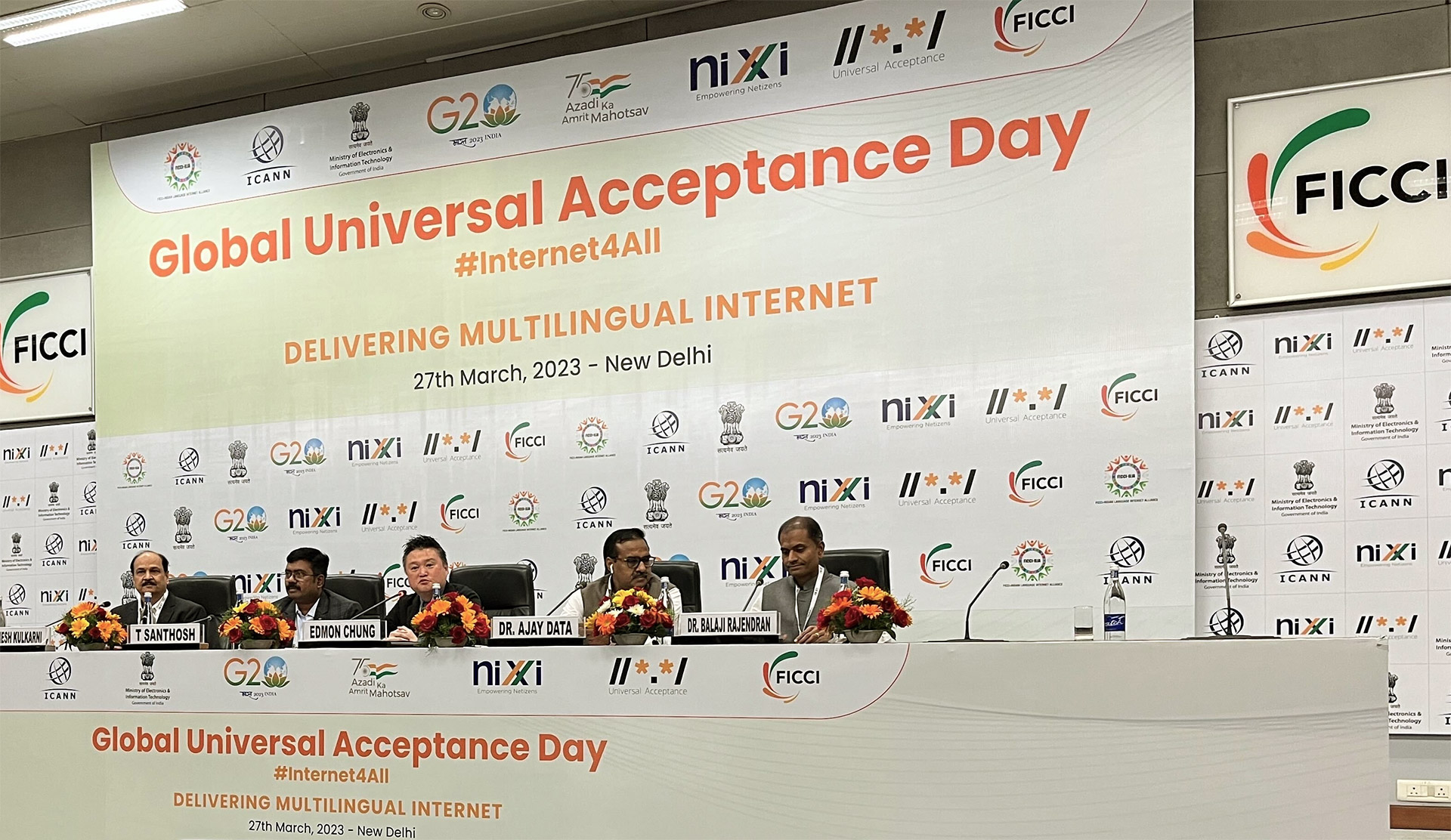 Government of India, MeitY Organizes 2-Day Event to Promote Universal Acceptance and Multilingual Internet
 UNESCO Director-General on Linguistic Diversity on the Internet: Main Challenges Are Technical
 ICANN Launches Russia’s Top-Level Domain in Cyrillic Characters
 First Three IDN ccTLDs Are Now Live
 CNN Live Interview on Internationalized Domain Names
 ICANN to Start Accepting Non-Latin TLD Applications as Early as Next Month
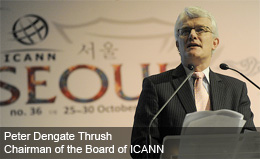 IDN Introduction Biggest Technical Change to Internet in Its 40-Year History, Says ICANN Chairman
A World-Renowned Source for Internet Developments. Serving Since 2002.