Home / Blogs

The Greatest Free Riders of Our Time

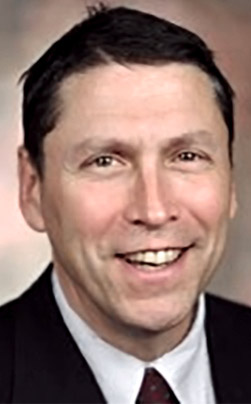
Rob Frieden

Former Southwestern Bell CEO, now General Motors CEO Ed Whitacre famously accused Google of free-riding his network, despite the obvious truth that Google pays for traffic delivery to peering points and ISPs gladly enter into reciprocal peering agreements in lieu of cash transactions that would likely result in a near zero payment as roughly equivalent traffic balances out. Mr. Whitacre did raise a legitimate question whether there are free riders and I'm seeing one darling and one unexpected group flying below the radar.

My list of supreme free riders: Apple and cellular radio carriers. Anytime an Apple customer and/or a wireless carrier customer pays for and downloads content via a wi-fi connection, Apple and the carriers avoid having to pay for transport, or providing transport respectively. So Apple can get paid for a book delivered to the iPad without incurring any delivery cost. Such a deal. I have not heard that Apple will pay a gratuity to Starbucks and all the other wi-fi hotspot operators whenever a book gets downloaded "off network."

Similarly recognize that anytime a wireless carrier subscriber uses wi-fi, in lieu of the carrier's network, the carrier has avoided having to provide service. Subscribers are not conserving monthly service minutes when they use wi-fi, particularly for data downloads by all you can eat data plan customers.

Some time ago, wireless carriers required cellphone manufacturers such as Nokia to disable wi-fi access in the mistaken perception that the carrier would not benefit when subscribers avoid having to use the carriers' network. Given the sorry state of these networks in the face of vastly increasing demand, wireless carriers wised up.

Now Apple and the cellular carriers qualify as the greatest free-riders of our time.

By Rob Frieden, Pioneers Chair and Professor of Telecommunications and Law. Visit the blog maintained by Rob Frieden here.

Related topics: Access Providers, Telecom, Wireless

WEEKLY WRAP — Get CircleID's Weekly Summary Report by Email:

Comments

Access costs Dan Campbell  –  Jan 29, 2010 2:14 PM PST

We hear this over and over, that somehow content providers are riding the Internet for free.  The biggest point always missed when that statement is made is that somewhere the content provider has to pay for access.  I'm sure Apple has data centers that serve up the songs and books and they pay for transit Internet service probably to multiple providers at those data centers.  Even for those that outsource their content to hosted facilities, they pay the hosting provider for service which incorporates the transport costs along with other costs (power, rack space, HVAC, ops costs, etc.) Google probably still pays in some places unless it has all peering arrangements now and, if so, then they are paying for a large backbone network for transport anyway.  You pay one way or another.

No such thing as "free riders" Jay Daley  –  Feb 02, 2010 1:50 AM PST

There is no such thing as "free riders".  The customer who downloads content over WiFi has paid their ISP for the access to do that.  That customer pays to be able to download the content they wish over the ISP network.  Similarly the wireless carrier subscriber has paid their ISP to be able to connect to the wireless carrier.

Every ISP or WiFi provider is paid by their access customers unless they choose to give their access customers a free service.  An ISP or WiFi provider that wants to charge content providers is trying to get paid for something they have already been paid for.

Its free for the telco if they dont get to see the $ in THEIR pockets :) Suresh Ramasubramanian  –  Feb 02, 2010 2:35 AM PST

'nuff said.

Actually, it is content providers who serve Brett Glass  –  Feb 02, 2010 10:10 AM PST

Actually, it is content providers who serve data via P2P who are the biggest free riders. They shift their bandwidth costs to the ISP, multiplying them in the process. See http://www.brettglass.com/FCC/pg0.html and http://www.brettglass.com/FCC/pg1.html.

Excellent point Dan Campbell  –  Feb 02, 2010 11:20 AM PST

Yes Brett, that's a good point and I was thinking along the same lines.  Those that ride for free may be those that do as you say and otherwise benefit from the content being distributed by their "volunteers" or if somene used P2P as their service delivery method but extracted either a subscription fee or a low-bandwidth credit card transaction fee of some sort, but otherwise used other party's resources for the transport of whatever it is they deliver.

Again, not quite The Famous Brett Watson  –  Feb 02, 2010 5:17 PM PST

They shift their bandwidth costs to the ISP…

No, they shift their bandwidth costs to the parties doing the downloading. The parties doing the downloading then pay their ISPs. There's no free ride here, except when the P2P is used to distribute files without the permission of the copyright holder, in which case the aggrieved party is the copyright holder, not the ISP.

If the P2P users are getting more than their fair share of bandwidth, and that irks you, then change your billing structure. Neutrality is maintained so long as you don't bill on the basis of protocol or destination. There's nothing unfair about charging more for more bytes-per-billing-cycle.

No; the costs aren't shifted to the Brett Glass  –  Feb 02, 2010 9:07 PM PST

No; the costs aren't shifted to the downloaders. The downloaders (and re-uploaders) are on flat rate connections and therefore pay no more. The ISP foots the bill for the extra bandwidth. And, as my slides show, the costs are not only shifted but multiplied a hundredfold or more in the process.

That's why we've done what you suggest: We've changed our billing structure. In particular, we prohibit by contract the hosting of servers on residential class connections. This is fair and in fact beneficial to the consumer, because otherwise we would have to raise our rates. But the FCC is poised to ban it, arbitrarily, at the behest of the free riders and pirates.

You say "free rider", I say "overselling" The Famous Brett Watson  –  Feb 02, 2010 10:28 PM PST

No; the costs aren't shifted to the downloaders. The downloaders (and re-uploaders) are on flat rate connections and therefore pay no more.

They don't pay any more, but they're still paying for it. We seem to have a difference of semantics. If someone is paying for a service in accordance with the terms under which that service is offered, then they are not "free riding" by my understanding of that term. What you call "free riding" in this case is just simple economic optimisation: costs are shifted to where they are cheapest. You say "free riding" and point at the content provider (of all people — not your customer); I say "overselling" and point to you. The difference is one of where the blame can be laid, and it comes as no surprise that you want to blame someone other than yourself for the problem. The remedy has been for you to stop overselling by changing your terms and conditions, and that fact settles the question of what the problem was to my satisfaction, if not yours.

Your chosen means of restructuring your billing, on the other hand, is a can of worms. I don't want to open that can here, because it tempts a raging debate on a subject which is related to but distinct from the one at hand. At the very least, however, I will say that your decree of "no servers" does not directly address the problem at hand, which is excessive use of bandwidth. Why should you care whether an application is a client or a server (or some other less clear-cut architecture) so long as its use of bandwidth is reasonable? Indeed, why would you care at all how much bandwidth people use so long as they pay for it? Why are you trying to cover your bandwidth costs by decreeing the particulars of how people can use their connectivity? What's wrong with an application-agnostic approach to bandwidth billing?

To post comments, please login or create an account.

Related Blogs

Related News

Topics

Industry Updates – Sponsored Posts

Verisign to Award New Infrastructure Research Grants

Breaking the DNS: Another Look at How SOPA Could Be Destructive

Neustar Names Joe Pasqua to Head Neustar Labs

President Obama Names Neustar President and CEO Lisa Hook to NSTAC

Verisign CEO to Serve on President Obama's National Security Telecommunications Advisory Committee

72 Confirmed Talks - If You're Attending, Now is the Time to Register

eComm 2009: Discussions on Restructuring Global Telecoms

eComm 2009 Signs Skype As Headline Sponsor Of European Conference & Awards Debut Event

Nominum CEO: Commercial vs. Open Source - Let Customers Choose

Ben Scott and Free Press in the Network Age

Supernova Interview: David Isenberg

Wendy Seltzer Interview: How Law Impacts the Network Age

Jon Peha, Chief Technologist, FCC, on the National Broadband Plan

Supernova Interview: JP Rangaswami

Growing Global Adoption of Nominum's Intelligent DNS Spells Obsolescence for Legacy DNS Systems

Nominum's Intelligent DNS Gives Service Providers Commanding Advantage Against Internet Threats

Nominum Delivers Service Provider Compliance Solution For Blocking Child Exploitation Sites Online

Visa, NeuStar Team to Propel Trusted Mobile Payments and Financial Services Globally

Expanding Internet Access Driving Software Piracy, Study Says

IP Rights in Digital Environment Key Element of Proposed Treaty

Hot Topics

Afilias

DNSSEC

Sponsored by
Afilias
Verisign

Security

Sponsored by
Verisign
Minds + Machines

Top-Level Domains

Sponsored by
Minds + Machines
dotMobi

Mobile

Sponsored by
dotMobi
Neustar UltraDNS

DNS

Sponsored by
Neustar UltraDNS